
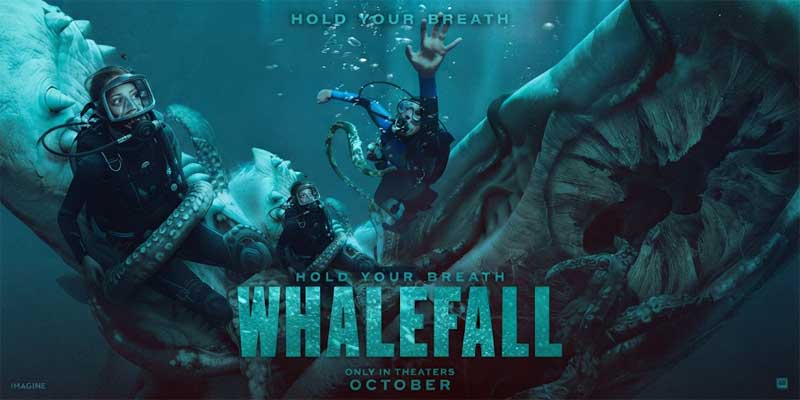
Most moviegoers walking into the theater anticipate a relentless, sensory creature feature—a terrified diver trapped within a cavernous marine belly, racing frantically against a draining oxygen gauge. Yet, as any comprehensive Whalefall review must reveal, this cinematic adaptation of Daniel Kraus’s acclaimed novel is far more profound than standard popcorn survival fare. Beneath the suffocating darkness and acidic horrors of the deep, the film delivers a devastating, deeply therapeutic meditation on generational trauma, unspoken grief, and the bitter distance that often fractures fathers and sons.
⚡ QUICK VERDICT: 9.2 / 10
A breathtaking, emotionally resonant survival thriller. Flawlessly marrying bone-chilling claustrophobia with a tear-jerking narrative of familial reconciliation, this feature turns an impossible biological nightmare into an unforgettable cathartic triumph.
The High-Concept Nightmare: Biology and True Claustrophobia
The premise is deceptively direct: Jay Gardiner, an alienated young scuba diver wrestling with unresolved guilt over his late father’s suicide, plunges into the cold waters off Monastery Beach to recover his father’s sunken remains. In a horrifying freak accident, a feeding eighty-foot, sixty-ton sperm whale swallows him whole. Jay finds himself plunged into a pitch-black, crushing organic labyrinth with roughly one hour of breathable gas left in his scuba tanks.
While the initial open-water diving sequences look relatively standard, the moment the jaw clamps shut and the narrative plunges into the beast’s digestive chambers, the atmosphere turns profoundly terrifying. For anyone suffering from claustrophobia, this experience is borderline agonizing. The production design treats the interior of the whale not as a whimsical storybook cavern, but as an oppressive, living meat grinder. Thick muscular walls convulse, sticky digestive fluids eat away at Jay’s neoprene suit, and the air is thick with foul, suffocating methane.
The auditory experience amplifies this dread. The low, thundering bass of the whale’s heartbeat vibrates through the theater seats, punctuated by the mechanical hiss of Jay’s regulator sucking down precious remaining air. Every agonizing scramble through slimy esophageal folds carries tangible biological consequence, making the physical survival aspect blisteringly intense.
Beyond Survival: A Deep Dive into Paternal Healing
What elevates this project so remarkably high in our Whalefall review is how organically it intertwines high-stakes thriller mechanics with profound emotional drama. The survival struggle does not merely serve as empty suspense; it becomes an acute psychological mirror. Jay is not just fighting to escape a leviathan’s digestive tract—he is wrestling with the suffocating memories of a demanding, emotionally distant father whose approval he could never quite earn.
This film speaks with piercing accuracy to anyone who has ever felt estranged from a parent, struggled with generational misunderstandings, or carried the heavy baggage of words left unsaid before a sudden passing. As Jay’s oxygen diminishes and nitrogen narcosis sets in, memories of his upbringing flood his consciousness. These aren’t cheap melodrama flashbacks; they are raw, nuanced dialogues between two wounded men who loved each other fiercely yet lacked the emotional vocabulary to bridge the rift between them.
In the most desperate, pitch-black hour of his life, surrounded by digestive enzymes and crushing pressure, Jay undergoes an extraordinary inner healing. He confronts the reality that his father was a deeply flawed, hurting human being rather than an insurmountable tyrant. The dialogue during these introspective revelations is magnificent—sharp, poetic, and exquisitely framed against matching visual metaphors of oceanic desolation.
A Searing, Transformative Lead Performance
Carrying a solo survival narrative inside a pitch-black enclosure requires an actor capable of communicating volumes with heavy diving masks obscuring their facial expressions. Having previously charmed mainstream audiences with fast-talking, comedic charisma in high-budget franchises like Resident Evil, the lead actor here delivers a career-defining dramatic transformation. His portrayal of Jay Gardiner is bruised, exhausted, and utterly captivating.
He captures the erratic emotional pendulum of isolation—from blind, weeping hysteria when his primary torch fails, to chillingly methodical problem-solving when calculating air consumption rates, and ultimately to a tender, tearful surrender to his familial grief. You feel every bruised rib, every rasping breath, and every cracked sob. It is an unvarnished tour-de-force that anchors the surreal biology of the premise in absolute emotional truth.
Why Every Word of Dialogue Matters
Unlike disposable monster thrillers that can be enjoyed passively, this film demands full, undivided attention. If you drift off or look away, you risk missing the subtle emotional threads that give the third act its immense wallop. The script is structured like an intimate theatrical play wrapped inside a catastrophe:
- The Philosophical Parallel: The anatomy of the whale’s stomach chambers mirrors the psychological stages of grief and reconciliation.
- Lyrical Reflections: Lines exchanged between Jay and his memories of his father echo across the murky water, turning practical survival equipment—gauges, dive knives, lift bags—into poignant symbols of fatherly lessons once resented, now understood.
- Solo Catharsis: This is a singular viewing experience tailored for solitary reflection, leaving viewers contemplating their own fragile family ties long after the lights come up.
Strengths & Minor Shortcomings in This Whalefall Review
- What Soars:
- Seamless balance between pulse-pounding survival panic and devastating father-son reconciliation.
- Genuinely terrifying claustrophobic set design that captures the horrifying reality of being buried alive inside a living creature.
- An extraordinary, emotionally naked performance from the lead actor that shatters expectations.
- Brilliant scriptwriting and thematic dialogue that rewards attentive viewers.
- Where It Falters:
- The opening surface cinematography and ocean dive sequences prior to the ingestion feel visually modest compared to the stunning visceral interior work.
- Viewers expecting a nonstop creature-chase movie may feel surprised by the deeply introspective, drama-heavy pacing of the midsection.
Final Verdict & Score
Verdict: 9.2 / 10 – An Unforgettable Masterwork of Heart and Horror
To conclude this definitive Whalefall review, the film is an extraordinary, heart-wrenching triumph. By treating its wild biological premise with absolute scientific gravity and grounding its thrills in the tender ache of family healing, it emerges as one of the most powerful and cathartic cinematic experiences of the year. Essential viewing for thrill-seekers and wounded hearts alike.
Reader Reviews & Rating
There are no reviews yet. Be the first one to write one.