
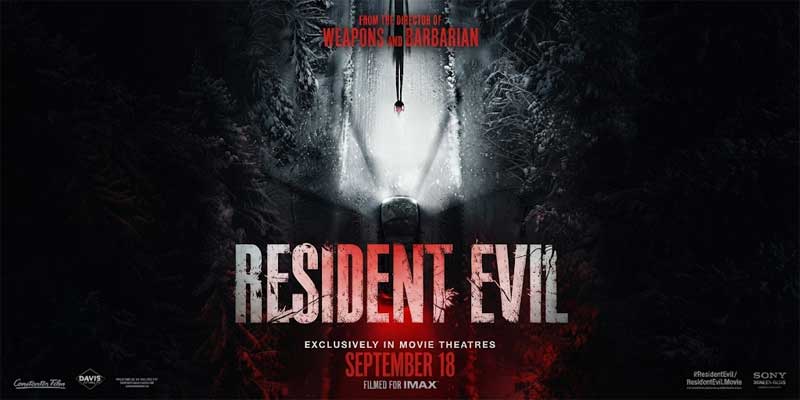
⚡ ACT ONE & TWO VERDICT: 8.5 / 10 – A Masterclass in Paranoia and Panic
To kick off this definitive Resident Evil (2026) review, Zach Cregger delivers an absolute masterclass in escalating dread. By ditching immortal special ops heroes for a sweating, panic-stricken medical courier, the first two acts brilliantly capture the claustrophobic survival mechanics of the video games. It’s funny, deeply cynical, and delightfully gruesome—even if you’ll want to scream at the screen when characters make terribly human mistakes.
Introduction: Is Resident Evil (2026) Worth Watching?
Some franchises refuse to stay in their graves. Others crawl out of the dirt, stumble through a dark corridor like a newly reanimated corpse, and immediately become someone else’s problem. Resident Evil has spent decades doing both, sliding between iconic video game milestones, bloated live-action cinematic romps, animated features, and biological nightmares that make you question why humanity ever trusted pharmaceutical conglomerates.
Now, filmmaker Zach Cregger takes a meat cleaver to the property with Resident Evil (2026), a horror reboot that mercifully approaches the franchise from a fresh, dirt-caked direction. Rather than leaning on leather-clad super-soldiers or treating us to yet another recycled afternoon with Alice, Leon Kennedy, or Claire Redfield, Cregger introduces Bryan: an ordinary medical courier played with twitchy, hyper-ventilating brilliance by Austin Abrams. His assignment appears simple on paper: deliver an urgent package straight to a hospital in Raccoon City.
Unfortunately, this is the Resident Evil universe, a place where phrases like “straightforward delivery” carry roughly the same statistical reliability as a sketchy biotech CEO swearing blind that their latest lab experiment is completely harmless. What follows is a frantic, blood-drenched struggle through an escalating winter nightmare filled with infected victims, grotesque mutations, deeply flawed choices, and enough visceral bodily horror to cause your local medical textbook to file for immediate emotional damages.
The most genuinely impressive quality of this Resident Evil movie review subject is its profound understanding that true survival horror is never just about throwing ugly monsters at the screen. It is about controlling information, severely restricting resources, manufacturing agonizing uncertainty, and forcing completely ordinary, fragile human beings to make horrific compromises under pressure. Every single doorway feels like a loaded chamber, and every seemingly safe patch of floor looks like one misstep away from an open-air slaughterhouse.
Cregger also brilliantly recognizes that terror and raw absurdity are permanent bedfellows. When everyday people confront things that completely defy the laws of biology and physics, their reactions are rarely noble, stoic, or Hollywood-polished. Sometimes they panic. Sometimes they argue over utterly trivial nonsense while the world collapses around their ears. That delicious cocktail of escalating dread, dark humor, and body horror gives Resident Evil (2026) a pulsing, vicious personality all its own.
What Is Resident Evil (2026) About?
At its core, Resident Evil (2026) follows Bryan, a medical courier who bites off way more than he can chew by accepting a high-priority delivery tied directly to Raccoon City General Hospital. Dragging himself through a bleak, frozen, isolated landscape, he quickly stumbles headfirst into a fast-spreading biological catastrophe populated by rabid infected citizens, twisted mutants, and the corporate fallout of the Umbrella Corporation’s endless hubris.
What starts as a mundane clock-punching job abruptly morphs into a desperate fight for oxygen. Bryan encounters threats that defy anatomical logic while trying to reach his final drop point, realizing far too late that the paperwork in his bag carries implications much darker than a standard invoice. Crucially, this is an entirely standalone nightmare within the franchise canvas rather than a lazy sequel or prequel to past cinematic eras. Its kinship with the original video games is rooted in mood, inventory-style dread, and environmental claustrophobia rather than cheap Easter egg checklist stuffing.
Act One: A Routine Delivery Becomes a Survival Nightmare
The opening establishes a world where ordinary decisions carry death penalties
The film opens with brilliant minimalism. Bryan is just a regular working stiff trying to punch the clock and earn his keep, only to find his task hopelessly entangled in an apocalypse that outpaced local authorities hours ago. The bleak, snow-choked roads and dead-silent surroundings instantly telegraph deep vulnerability. There is zero cozy comfort to be found in this wilderness, and AAA roadside assistance isn’t answering emergency dispatches when the locals start chewing their own thumbs off.
This setting serves a brilliant narrative function. Isolation eliminates easy narrative shortcuts. In a bustling metropolis, a terrified protagonist can duck into a police precinct or flag down a SWAT team. Here, every forced detour burns precious time, every route marker brings existential dread, and every stalled engine turns a minor inconvenience into a slow, agonizing execution.
Giving us a pedestrian protagonist rather than an unstoppable special forces operator changes the rules of engagement. Bryan doesn’t possess pre-programmed combat rolls or a tactical HUD; he has raw panic and bad knees. Survival horror sings loudest when the audience realizes the hero knows just as little as they do.
Bryan’s domestic baggage adds emotional stakes, even if they feel rushed
Before things go completely sideways, we catch a glimpse of Bryan’s personal life—specifically a tense, uncomfortable conversation with his girlfriend Michelle regarding her pregnancy. It’s a neat touch that anchors him as an actual human being with a life before the outbreak, rather than an anonymous meat sack custom-built to scream at digital CGI zombies.
Yet, this sub-plot creates an interesting friction. Bryan has massive life choices looming over his head, but the universe abruptly decides to bypass couple’s therapy in favor of biological meltdown. While the script gestures toward adult themes of commitment and impending fatherhood, the break-neck pacing treats these moments more as narrative fuel than deep character study. Still, it beats standard action-movie fodder where characters have zero interior life whatsoever.
First blood: The brutal logic of the infected
When Bryan stops to help an injured woman stranded in the snow, the sequence brilliantly subverts classic horror tropes. What looks like a standard emergency morphs into pure nightmare fuel. A local deputy turns up, a fiery crash ensues, and basic social contracts evaporate in a shower of teeth and viscera.
When our courier finally seeks refuge at a gloomy farmhouse, the threats scale upward into unhinged body horror. The infected here aren’t just slow-moving background props; their anatomy twists and mutates with gross fluidity. Every room cleared feels less like a triumph and more like a temporary lease on a coffin.
Act Two: The Hospital, Umbrella, and the Illusion of a Solution
Raccoon City as a vertical labyrinth of doom
As Bryan pushes deeper toward the hospital, the film locks you into a sensory trap. The setting evolves from an open frozen wasteland into an indoor labyrinth that promises sanctuary while delivering fresh horrors behind every locked ward door. It’s a direct nod to classic survival horror game pacing—where reaching a checkpoint room only highlights how thoroughly trapped you actually are.
Umbrella Corporation: Corporate malpractice taken to monstrous extremes
The shadow of the Umbrella Corporation looms heavy over every frame, serving as a pitch-black corporate satire. They are the ultimate embodiment of bureaucratic indifference—a multi-billion-dollar entity that views catastrophic biological contamination as a mere administrative quarterly loss. Bryan is just an outsourced casualty in a corporate oversight disaster.
The package changes everything
The turning point arrives when we discover what’s inside Bryan’s courier bag: an experimental stabilization serum that functions as a potential cure for the contagion. Suddenly, his selfish dash for self-preservation gains moral weight. He isn’t just running for his own skin anymore; he’s carrying humanity’s last exit ticket. But there’s a cruel narrative twist—Bryan has already been exposed, creating a ticking clock where the cure’s delivery mechanism is physically mutating into its own worst enemy.
Character Analysis: Austin Abrams Gives Bryan a Human Center
Let’s give credit where credit is due: Austin Abrams carries this entire cinematic vehicle on his bruised shoulders. By refusing to play Bryan as an invincible action god, Abrams injects genuine nervous energy and dark, awkward humor into the proceedings. His defensive quips and frantic breathing make the gore palatable. When he makes a hilariously catastrophic tactical error, you don’t roll your eyes at a stupid character trope; you nod, because under that kind of extreme panic, we’d probably trip over our own shoelaces too.
Visuals, Sound Design, and Creature Effects
Visually, the choice of a desolate, blinding snowscape is a stroke of genius. Snow usually implies a blank slate or pristine calm, but here it highlights absolute exposure—every footprint tells a story, and every distant shadow stands out against the white glare. Paired with sound design that uses sudden, echoing silence and sickening organic wet squelches rather than cheap orchestral jumps, the film gets under your skin before the monsters even enter the frame.
The Ending Explained: Bryan Becomes the Final Horror
The final act delivers a devastating subversion of expectations. Bryan reaches the hospital lab, but his cellular structure has already crossed the point of no return. His body fractures and blooms into a magnificent, horrifying grotesque monstrosity right in front of the lead researchers.
In a frantic, chaotic climax in the upper lab levels, Bryan—now completely lost to the mutation—clashes with the final surviving scientist. Their struggle sends both tumbling through a shattered glass facade, and the precious syringe containing the cure plummets into the snowy abyss below, shattering beyond recovery.
The film ends on an uncomfortably bleak note. As National Guard helicopters swarm overhead, a fully mutated, unrecognizable Bryan lets out a final roar into the winter gale. There is no neat Hollywood bow, no triumphant vaccine rollout, and no comforting closure. The mission failed, the cure is lost, and the nightmare is just getting started on a national scale.
What Works and What Doesn’t?
What works:
- Fearless direction: Zach Cregger commands tone like a seasoned maestro, keeping tension razor-sharp.
- Stellar lead anchor: Austin Abrams makes panic look artful, vulnerable, and deeply human.
- Inventive creature design: Practical and digital effects blend into genuinely unsettling biological body horror.
- Uncompromising finale: Refusing to hand out a fairy-tale ending gives the film lingering thematic weight.
What doesn’t work as much:
- Slightly episodic mid-section: Certain encounters feel like sequential video game side-quests rather than flowing cinematic movements.
- Underbaked sub-plots: Personal baggage like the pregnancy thread gets swallowed by the sheer velocity of the monster action.
⚡ MID-FILM TO ENDING VERDICT: 7.5 / 10 – A Brutal, Unforgiving Downer
To wrap up this comprehensive Resident Evil (2026) review, the second half trades high-speed momentum for a tragic, uncompromising plunge into body horror nihilism. While the narrative rushes past some of its emotional character payoffs, our definitive Resident Evil (2026) review concludes that its terrifying creature evolution, bleak climax, and refusal to offer cheap comfort make it a must-watch cinematic trip for hardcore horror purists.
Frequently Asked Questions About Resident Evil (2026)
Is Resident Evil (2026) a total reboot?
Yes, it establishes an entirely separate narrative canon and ignores previous live-action movie continuities.
Does the movie feature classic game heroes like Leon or Claire?
No, the story shifts its lens entirely onto original characters like Bryan, focusing on an isolated survival crisis rather than fan-service cameos.
Does Bryan survive the events of the film?
Spoiler alert: No. Bryan succumbs fully to the biological infection, undergoing a catastrophic physical transformation.
Reader Reviews & Rating
